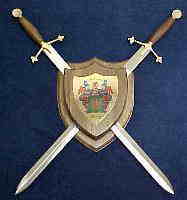
 Deluxe
Family Panoply Deluxe
Family Panoply
Deluxe Family Coat
of Arms on glowing gold metal mounted with two solid Walnut shields and
two real 32" Steel Swords. Family Panoply is numbered with it's own Certificate
of Authenticity signed by the head historian. $429.95
|
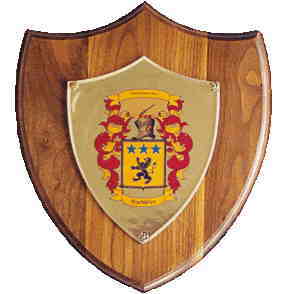 Excaliber
Shield Excaliber
Shield
Walnut Excaliber
plaque proudly displays your most ancient family name coat of arms with
shield, crest and motto and mounted on solid walnut 12" x 14"$129.95
|
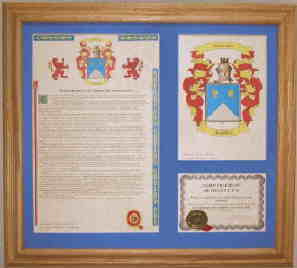 Family
Champion Set Framed Family
Champion Set Framed
Our deluxe family
history for the "must have" Family Heritage keepsake. Parchment Family
Research Champion set is matted and framed 18" x 20" as shown. $159.955
|
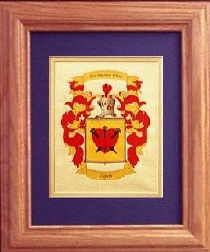 Large
Family Coat of Arms Framed Large
Family Coat of Arms Framed
The most ancient
Coat of Arms registered to your family with shield, crest and motto on
parchment, matted anf framed with solid wood frame.
10" x 13"$79.95
|
 Anniversary
Print Framed Anniversary
Print Framed
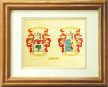
Two family coat
of arms of your choice with your special date -- Anniversaries, Weddings,
Birth Announcements, partnerships. Framed in oak and measures 10" x 13".
$99.95
|
 Family
Coat of Arms Golf Shirt Family
Coat of Arms Golf Shirt
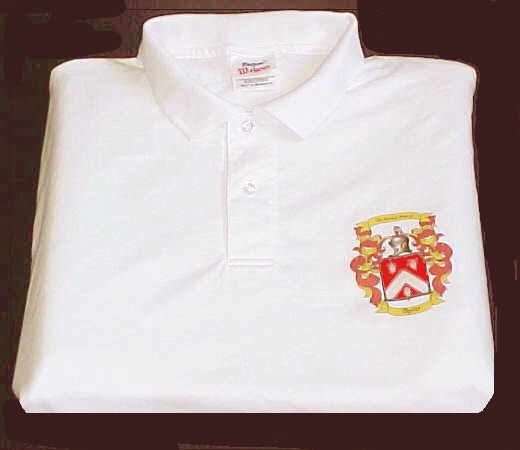
Perfect for the
golf course and family re-union. Your family Coat of Arms is printed in
authentic heraldic colors and press sealed onto 50/50 blend shirt - Men's
sizes M to XXL. $34.95
|
 Personalized
Coffee Mug Personalized
Coffee Mug
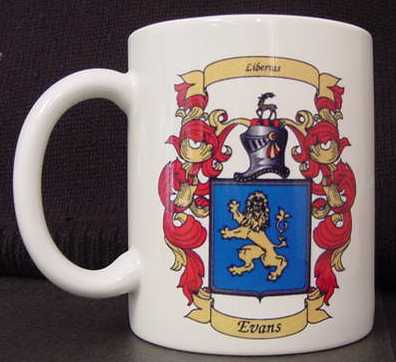
Family Coat of Arms
Coffee Mug with ancient family shield, crest and motto is beautifully clear
heraldic color. Dishwasher and microwave safe.Sets of 4 Mugs too. $18.95
each /$69.95 Set of 4
|
 Personalized
Mouse Pad Personalized
Mouse Pad
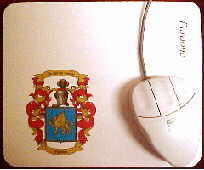
Beautiful
personalized mouse pad displays your ancient Family Coat of Arms with shield,
crest and motto in authentic heraldic colors with your first name, middle
initial, and last name. $22.95
|